
Easy Wins – Review Your Delivery
This “Easy Wins” series is intended to help you preach and teach with greater clarity, creativity, and passion. Each post will address one element in the process, creation, and delivery of a message. These are not “the only way to do it.” Instead, they are things I’ve discovered and implemented in my own 20+ years of preaching. If you use them, I think you’ll find they are easy wins for your ministry.
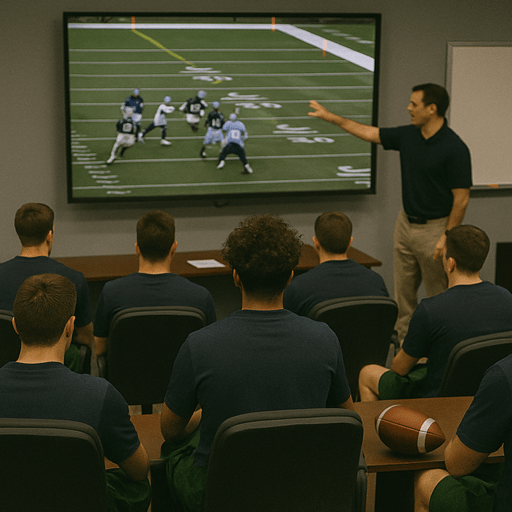
TOPIC: How To Review Your Delivery (aka, The Case For Checking The Game Tape)
You’ve preached the sermon. Exited the pulpit. Met with folks afterwards for prayer. Returned home. Tired and empty in the way that only preaching can produce.
How did it go? How did you do in the preaching moment? To be sure, on some levels, you will never know the full extent of this question. However, it can be helpful to self-review for some areas of encouragement and improvement.
The Easy Win for a form of getting an honest assessment of some parts of your preaching is this: Review Your Delivery. That is, let’s check the game tape and see what you can learn.

Here’s The HOW:
- Ensure It Is Recorded – Nothing fancy required here. Just ensure that when you preach that it is recorded somehow. Maybe your church has a media team and can assist. If not, even just your iPhone will do. Capture you preaching the message where you will have audio AND video.
- Give Yourself Space/Rest – Don’t rush home and immediately get into the tape session. Recommendation here is wait at least a day or two (especially two days if you know Mondays can be discouraging days).
- Get Supplies – You need the recorded sermon, a notebook, and a pen.
- First Watch (Audio Only) – Turn on the recording but do not watch it at all. Only listen. Listen for the verbal presentation of the message. Note and count crutch words like “Uhhh” or “you know” or whatever may be the fillers you use. Did you employ different tones and emphasis to vary things up or was it monotone? Were you overly loud or did you mumble? Write down any thoughts or takeaways on the verbal delivery.
- Second Watch (Video Only) – Turn on the recording a second time but do not listen to it. Only watch. See the visual presentation of the message. Note and count how often you moved to address the right/left/and center side of the room. Note how long you spent on each part of the stage (for example, did you spend a majority of your time only talking to the right side and neglected the center or left?). See if you portrayed any negative body language such as hands in pocket or arms crossed in front of you. If you used a visual aid or illustration or slides, did you physically handle that well? You weren’t blocking or distracting? Did you spend the whole sermon looking down at your manuscript? Write down any thoughts or takeaways on the physical delivery.
- Third Watch (Both Audio/Visual) – Turn on the recording a third time to put it all together. Watch and listen. Especially on this viewing, note things you did well. The first two viewings have probably opened your eyes (and ears!) to things you know you need to address/improve upon. Let this third viewing be focused on the full presentation and what you see you did well. It is ok to note those things!
- Wait And Review – After observing yourself for three times, you should leave the notes alone for a day or two. Come back to them after some time and figure out what you can/will address going forward.
- NOT Every Week – This is not a practice to be done every week. First, your schedule is probably full as it is – life and ministry continue. Second, it will be more beneficial to run this review every so often (maybe once every two months? Once a quarter?) So that you see where you are making progress, and what areas still need improving.
Different Category:
Content – What I’ve detailed above is more geared around the delivery of the message both verbally and physically. Another great area to evaluate is the actual content of the message. Did you preach the Word clearly, creatively, and passionately? Did you make known the Gospel of our Lord Jesus Christ? Did you point to Him? Did you explain historical context? Those are all fantastic evaluation questions and would be a whole separate category I will do a future post about. I’ll leave a recommendation below in the Optionals category that would be helpful here.
Optionals:
Get Others Involved – The original point here is to give you solid structure to do your own self evaluation. Just as an athlete will study the game tape to find out helpful intel, so can you. However, you can also involve others as well. You can politely ask for detailed feedback (maybe even using much of what I describe here). The (very) key point I would make: ensure the people you involve are people you trust! You need to know they love you in Christ and will look to be a blessing to you. I do not mean that they will only give you “positives” – that won’t give you the full picture. Furthermore, they need to have the maturity to know they will be delivering some areas of helpful critique. Can they do that well? So, if you want to pursue this option: find trustworthy people and give them structure they can work with. In so doing, they can bless your ministry in a unique way and you can maximize your growth from it.
Here’s The WHY:
- Evaluation Is Facing The Truth – Evaluating yourself in a manner like this is how you get away from how you “assume” you are preaching to actually seeing it with your own eyes. As noted above, there’s a good chance you will NOTICE things you never even knew you were doing. Maybe its a small thing that can be easily corrected. Great. It is going through an evaluation process that opens your eyes to what is really going on. Embrace it
- Evaluation Can Lead To Satisfaction – Let’s say the first time you do this process, your notes show you counted 54 crutch words/phrases in the sermon. Armed with that knowledge, you resolve to clean it up. The next time you evaluate, you only count nine of them. That’s solid improvement and its right to feel a measure of satisfaction in doing your job better. If you never evaluate to this level, you don’t have the pathways to get there.
- Evaluation Promotes Humility – When you face the truth of how you are actually delivering messages, it will keep you in check. Not with a false humility or even a dejected discouragement – but with a proper humility. There are things you are doing well and there are still areas to grow in. That viewpoint will serve you well.
There is the Easy Win: utilizing self evaluation as a means of growing in your delivery.
Have you employed a process like this before? Did you see good results? What other questions or areas of evaluation might be helpful? Let me know in the comments.
**Be sure to check out the Easy Wins page on the blog where you will find more topics just like this. No expensive course or paywall here – my goal for the series is to bless and help others as they seek to improve.
If you have a topic or question about preaching you’d like to see addressed here, email me at joshhumbert@gmailcom. If you’re interested in me delivering these as live training/development sessions, just email me that as well.**
 Preaching, Reviews, Essays, And More...